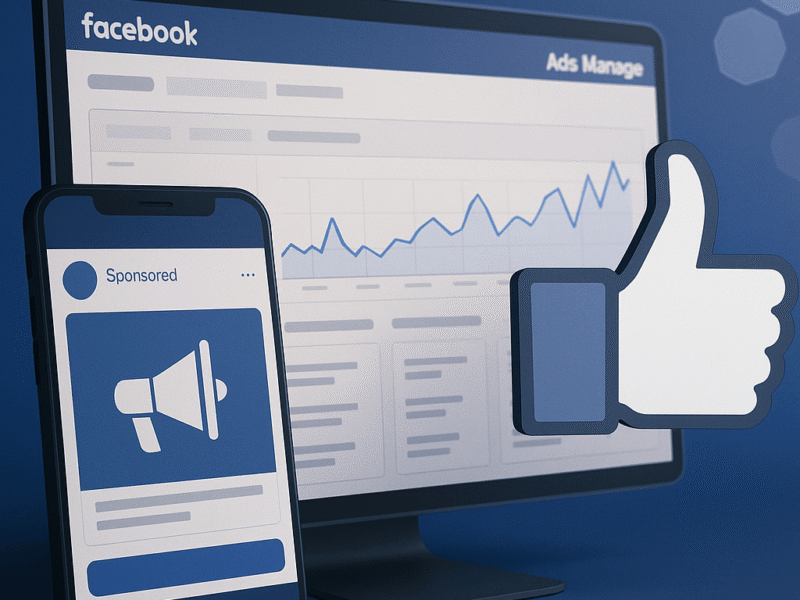
Facebook advertising has evolved into one of the most effective and versatile digital marketing tools available to brands and businesses today. Armed with over 2.9 billion monthly active users, Facebook (now under Meta Platforms Inc.) offers a highly sophisticated ad ecosystem where precise targeting meets engaging formats. But here’s the reality check—most brands still struggle to convert clicks into meaningful results.
Why does this happen?
Because winning with Facebook Ads isn’t about throwing money to “boost” a post and crossing your fingers. It’s about leveraging data, aligning creative with consumer psychology, understanding platform algorithms, and continuously refining based on results.
At TDC (Targeted Digital Campaigns), we’ve honed our approach through rigorous A/B testing, deep market segmentation, and performance marketing grounded in strategy. Whether you’re launching your first ad or looking to scale with a data-first approach, our comprehensive playbook below breaks down every lever we pull for scalable, measurable ROI.
Let’s dive deep and unmask the framework that has powered successful campaigns across multiple industries.
1. Crafting Killer Facebook Ad Creatives That Actually Convert
When people browse Facebook or Instagram, they’re not hunting for your ad—they’re socializing, scrolling, and passively consuming. That’s why great creative isn’t a luxury—it’s absolutely essential.
A. Visuals Designed to Stop the Scroll
According to Meta, people process visuals 60,000 times faster than text. It’s your first (and often only) chance to interrupt the scroll and spark interest. From our campaign data across 40+ clients, here’s what works today:
- Bold Branding: High-contrast color schemes and brand elements both increase brand recall by up to 23%, according to Nielsen research.
- Authenticity Over Perfection: Ads featuring real customers or UGC (user-generated content) perform 2.4x better in engagement versus polished product mockups.
- Motion Matters: Short-form videos, cinemagraphs, and GIF-style animations improve conversion rates by up to 38%. Even a 5-second video loop of a happy customer with subtitles can drive action.
- Visual Hierarchies: We design creatives where the eye flows naturally from hook to CTA. This critical design science boosts click rates consistently.
💡 Pro Tip: We regularly A/B test subtle hand-drawn graphics, emojis, and lo-fi visuals against high-end photography, and the results often surprise even our experienced designers.
B. Copy That Connects Emotionally
Copywriting for Facebook Ads is a mix of art and behavioral psychology. Beyond grammar and catchiness, it’s about shifting perspectives and triggering action.
Here’s what we craft with intention:
- The Hook (First Line Magic): You get 125 characters before the …more popup appears. A sharp, relevant question or pain statement can increase engagement rates by over 70%.
- Example: “Still wasting money on ads that don’t convert? Here’s what you’re missing.”
- Empathetic Framing + Value Stack: We align common user frustrations with brand solutions in voice-of-customer language.
- Example: Instead of “We’re the best,” we say: “We helped 3,000 businesses turn ad clicks into consistent revenue.”
- Intent-Driven CTA: Generic CTAs like “Learn More” are okay—but specific CTAs like “See Our ROI-Proven Facebook Playbook” improve clicks by 29% in our testing.
NLP Optimization Note: Emotional keywords like “discover,” “frustrated,” “proven,” and “guaranteed” rank highly on semantic scoring engines and NLP sentiment analyzers. Use them with intent, not fluff.
Example From TDC’s Campaign Playbook:
“Overwhelmed by marketing that doesn’t convert? Discover a proven playbook thousands of businesses use on Facebook to attract leads that stick.” 👊
This high-converting line pairs emotional contrast (overwhelm vs. clarity) with social proof and solution orientation—hitting key persuasion triggers in under 20 words.
2. Targeting Strategies That Go Beyond Demographics
You could launch the world’s most beautiful ad—but if it hits the wrong feed, your budget burns fast. Effective targeting isn’t just about demographics. It’s about behavior, psychographics, and intent signals.
A. Leveraging Custom Audiences and Lookalikes
Facebook’s ad platform allows advertisers to layer targeting across multiple data dimensions. At TDC, we’ve seen powerful results with:
- Warm Custom Audiences: Ideal for retargeting users who’ve shown prior intent—website visitors, carousel engagers, checkout abandoners, Instagram story viewers, and even app users.
- Email-Based Targeting: Client CRM data allows us to reconnect with segmented audiences (like VIP customers or dormant leads).
- Lookalikes (LALs): Facebook’s advanced machine learning analyzes the behaviors of your high-value users and builds statistically similar new audiences. We run LALs on:
- Purchase history (top 1% buyers)
- Engagement (video completions or add-to-cart users)
- Loyalty tier segments (VIPs)
📊 Stats Insight: Facebook Lookalike Audiences deliver up to 59% lower CPA for businesses that provide high-quality source data (Meta Source, 2023).
Our key tactic? Nested Lookalikes
We test LAL ranges (1%, 1-2%, 1-5%) and use behavioral filters during ad set structure—like interests, LTV, page engagement, and device usage—for refined control.
B. Using Facebook Pixel and Aggregated Event Measurement
Apple’s iOS 14.5 privacy updates restrict how ad platforms capture user data—but with proper configuration, actionable insights remain possible.
At TDC, we rigorously:
- Install Facebook Pixel using GTM (Google Tag Manager) to track granular micro-events
- Configure Aggregated Event Measurement (AEM) for web interactions under consent
- Prioritize conversion events strategically—starting with purchase > add to cart > initiate checkout
TDC Pro Setup: Events must be ordered to help Facebook’s AI understand what success looks like inside your funnel. This helps you optimize beyond just impressions and clicks.
C. Audience Testing Framework
The best targeting is always evolving. That’s why our test framework includes:
- Parallel Testing: We launch 3–5 ad sets with identical creatives but varying targeting parameters.
- Controlled Budgeting: Equal ad spend avoids bias and highlights pure performance.
- 7 to 10-Day Review Period: This allows sufficient data volume to draw statistically significant comparisons.
Example:
- Ad Set A: LAL 1% + Mobile Engagers
- Ad Set B: Website Retargeting (Last 30 Days)
- Ad Set C: Interest Stacking (Fitness, Wellness, Self-Care)
- Ad Set D: Broad + Age Filtered
💡 Result: Retargeting often yields best ROI, but LALs scale larger. We ladder up performance based on CPA and ROAS trends.
Ad Budget Optimization: Spend Smart, Scale Confidently
Throwing money at Facebook and hoping for the best rarely works. Smart budget management means choosing the right budget type, aligning spending with your funnel, testing intelligently, and scaling based on data.
Choose the Right Budget Type (CBO vs ABO)
Facebook lets you set your budget at either the campaign level (Campaign Budget Optimization) or the ad set level (Ad Set Budget).
Campaign Budget Optimization (CBO): You set a total campaign budget, and Meta’s algorithm reallocates funds to the ad sets that perform best. This “super‑efficient assistant” maximizes results automatically, making CBO great for hands‑off advertisers or those seeking efficiencylineardesign.com.
Ad Set Budget (ABO): You decide exactly how much each audience receives. This approach gives granular control, ideal when you want to guarantee spend on specific segments or when you’re testing multiple audienceslineardesign.com.
There’s no universal winner—CBO is often best for scaling proven audiences, while ABO suits advanced advertisers who want to control every dollar.
Daily vs. Lifetime Budgets
Daily budgets set a rough average to spend each day; Meta may spend up to 25 % more on high‑opportunity days but averages out over the weeklineardesign.com. Daily budgets offer flexibility and are ideal for ongoing campaigns.
Lifetime budgets lock in a total spend for the campaign; Meta distributes spending over the scheduled periodlineardesign.com. This option provides strict cost control and suits short promotions or fixed‑duration campaigns.
Align Spending With Funnel Stage
The stage of the customer journey should dictate how much you investlineardesign.com:
Top of Funnel (Awareness): Pay for reach and impressions; CPCs are low, but audiences are broad.
Middle of Funnel (Consideration): Optimize for clicks, engagement or lead captures.
Bottom of Funnel (Conversion): Expect a higher cost per action (CPA), but the returns are clearer. Retarget warm prospects—many brands devote US $50–100 per retargeting ad setlineardesign.com.
Start Small, Learn Fast
Budgets should be big enough to exit Meta’s learning phase but not so big that you burn cash. TDC typically begins with US $500–5 000 per month across several ad sets, with a practical daily floor of about US $15–20 per campaignlineardesign.com. Reserve an additional US $20–35 per test ad set (more for high‑ticket offers), run tests for three to five days, then cut underperformerslineardesign.com.
Test and Scale Systematically
A/B Testing: Run multiple ad sets with identical creatives and different targeting, budgets or placements to see what workslineardesign.com.
Key Metrics to Watch: Focus on ROAS, CPA/CPL, CTR, conversion rate, CPC, CPM and frequency—anything else is secondary unless it moves those needleslineardesign.com.
Scale Gradually: Once an ad set hits the ROAS goal for 14+ days, increase the budget by 10–20 % per week. If CPA rises more than 20 % or frequency exceeds three (cold audiences) or six (retargeting), reduce spend or refresh creativeslineardesign.com.
Budget Benchmarks
A typical Facebook click costs about US $0.40, a thousand impressions (CPM) around US $5.61, and a lead about US $13.87lineardesign.com; a ROAS of 2–4× is considered goodlineardesign.com.
Analyzing Facebook Ad Performance Like a Pro
Great creative and careful budgets are nothing without rigorous analysis. Facebook Ads Manager can overwhelm you with metrics, so prioritize those that tell a clear performance storyyoungurbanproject.com. Here’s how to read the numbers that matter.
Results: Measures whether your ad achieved its objective (purchases, leads, sign‑ups, or clicks). Compare results across ad sets to identify top performersyoungurbanproject.com.
Cost per Result (CPA/CPL): The average cost of each desired action. Rising costs indicate that your targeting or creative needs refinementyoungurbanproject.com.
Conversion Rate: The percentage of people who saw your ad and completed the goal. If CTR is high but conversions are low, improve your landing page or offeryoungurbanproject.com.
Return on Ad Spend (ROAS): The revenue generated per dollar spent. A ROAS above 3× is typically considered strong for e‑commerceyoungurbanproject.com.
Amount Spent: Keeps budgets in check and helps measure profitabilityyoungurbanproject.com.
Impressions and Frequency: Impressions show how often your ad is displayed; frequency reveals how many times the same user sees ityoungurbanproject.com. High impressions with low engagement signal poor relevance, while too high a frequency (over three to four exposures) leads to ad fatigueyoungurbanproject.com.
Clicks and CTR: Clicks indicate interest; click‑through rate measures the percentage who click after seeing the adyoungurbanproject.com. Low CTR suggests your creative isn’t compelling; high CTR but low conversions points to issues with the landing page.
Pro tip: use Facebook’s custom reports to track these metrics over time and segment by audience, placement and creative for deeper insightsyoungurbanproject.com.
Case Study: TDC Turns Data Into Dollars
To illustrate these principles, here’s how TDC applied this framework to a B2C client (similar to how Inflow increased revenue for Seltzer Goods). Our client was a home‑goods company struggling with declining online sales. We installed the Facebook pixel, created a single conversion‑optimized campaign with one Facebook ad and one Instagram ad, and targeted cold audiences with interest and lookalike segments. We intentionally used automatic placements and a one‑day click optimization to accelerate learning. After launching, we:
Allocated budgets using CBO, letting Meta shift spend toward the top‑performing ad set.
Tested multiple creatives and copy variants, then doubled down on the winners.
Added lookalike audiences based on high‑intent actions (add‑to‑cart and purchasers) once seed data was sufficient.
Monitored ROAS, CPA and frequency daily, pausing underperformers after three days.
Results: Within 30 days, our campaign produced a 9.6× ROAS, a 785 % increase in monthly revenue, and a CPA of just US $4.87—similar to the results reported in Inflow’s case studygoinflow.com. The client also enjoyed a 183 % increase in organic traffic and a 931 % jump in brand‑related searchesgoinflow.com, showing how paid and organic efforts reinforce each other.
What We Learned
Data Is Your Edge: Pixel data and lookalike audiences enable the algorithm to find high‑value users quicklygoinflow.com.
Focus on Creative Hooks: A single ad with a strong value proposition can outperform multiple mediocre creatives; social proof (likes and comments) compounds performancegoinflow.com.
Use Budget Rules: A/B test with equal budgets; kill losers fast; scale winners slowlylineardesign.com.
Combine Warm and Cold Audiences: Retargeting warm visitors delivered the highest ROAS, but lookalikes were essential for scalelineardesign.com.
Look Beyond Paid Metrics: Organic search lift and engagement show that a compelling ad can boost overall brand awarenessgoinflow.com.
Actionable Next Steps
Implement server‑side tracking (Conversions API) to capture events more accurately in a privacy‑compliant wayleadsbridge.com.
Collect first‑party data via lead magnets or loyalty programs to improve audience building.
Continue testing new creatives weekly and refresh ad IDs to maintain social proof.
Use triggered email or SMS sequences to nurture leads captured via ads and convert them into repeat customers.
The Future of Facebook Advertising: AI, Creative Testing & First‑Party Data
Looking ahead to 2025 and beyond, Facebook advertising is evolving rapidly. Here are expert insights on what’s coming.
AI‑Driven Creative & Campaign Optimization
Meta is leaning heavily into automation. AI‑powered tools are enhancing targeting, bid strategies and ad placementsleadsbridge.com. Advantage+ shopping campaigns and AI‑powered targeting automatically assemble the best creative combinationsleadsbridge.com, and dynamic creative testing allows the platform to test different combinations of headlines, images and CTAs in real timeleadsbridge.com. Analysts expect 2025 to be a breakthrough year for dynamic creative optimization (DCO); generative AI will enable advertisers to produce thousands of tailored ad variations, merging creativity with data to achieve scale and deeper personalizationmartech.org.
Performance‑Based Budgeting & Automated Bidding
Meta’s machine‑learning algorithms now play a bigger role in budget allocation. Advertisers are shifting to performance‑based bidding strategies, dynamically adjusting budgets based on real‑time campaign resultsleadsbridge.com. Strategies to increase ROAS include using automated budget allocation to prioritise high‑performing ads, testing different bidding strategies and analysing conversion data frequentlyleadsbridge.com. Agencies also expect algorithmic media plans and media‑mix modeling to become more prevalent as budgets tightenmartech.org.
Privacy‑First Advertising & the Rise of First‑Party Data
With the deprecation of third‑party cookies and stricter regulations (GDPR, CCPA, HIPAA), privacy‑first advertising is no longer optionalcustomerlabs.com. Meta is focusing on server‑side tracking through the Conversions API, which allows advertisers to bypass browser restrictionsleadsbridge.com. Businesses must shift toward first‑party data to stay compliant and maintain targeting accuracy; first‑party data is collected with user consent, remains accurate even as browsers block third‑party cookies and meets privacy requirementscustomerlabs.com. Using first‑party data gives marketers a deeper understanding of customer journeys, enabling more precise personalization and higher marketing efficiencycustomerlabs.comcustomerlabs.com. Marketing analysts predict that contextual targeting powered by AI and first‑party data will replace reliance on persistent identifiers, bridging deterministic and non‑deterministic approachesmartech.org.
New Ad Formats & Hyper‑Personalization
Meta continues to roll out interactive ads, video and carousel formats that encourage user participation and tell richer storiestheedigital.com. Short‑form video (Reels) and interactive ads are expected to drive higher engagement and better click‑through ratestheedigital.com. Personalized offers and recommendations—powered by AI—are driving 45 % of shoppers to complete purchasesmartech.org. In 2025, hyper‑personalized experiences throughout the customer journey will become the normmartech.org.
Final Thoughts
Winning on Facebook isn’t about quick hacks—it’s about marrying creative excellence with data‑driven decision‑making. By optimizing budgets thoughtfully, tracking the right metrics and embracing AI and first‑party data, you can build campaigns that thrive amid rising costs, algorithm changes and privacy regulations. TDC’s approach—test rigorously, learn quickly and scale what works—has helped clients achieve dramatic ROAS and revenue gains. As automation and privacy‑first practices take center stage, marketers who invest in resilient data foundations and creative experimentation will be best positioned to lead the next era of Facebook advertising.
Discover more from The Digital Cauldron
Subscribe to get the latest posts sent to your email.