
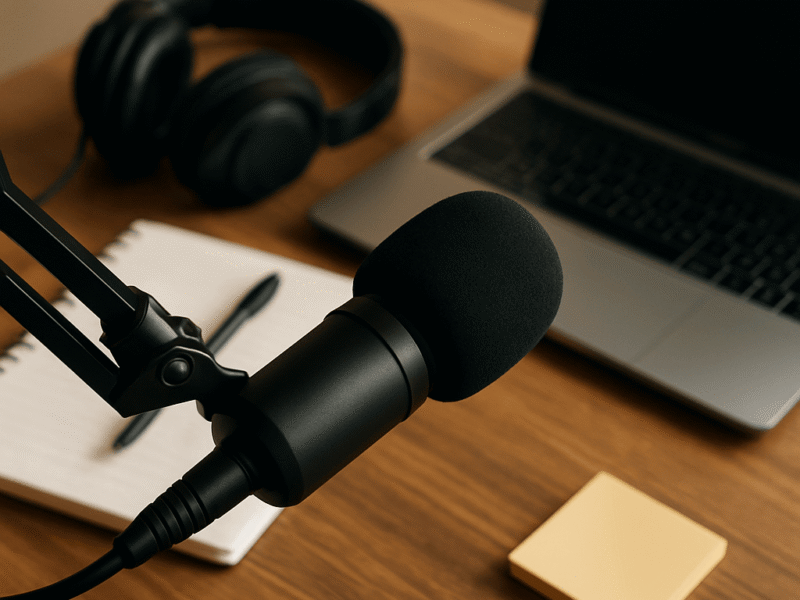
If podcasting feels a bit like magic—voices in your ear that make you nod, laugh, or take notes—it’s because great shows do more than talk. They build a relationship. Before you invite guests, promote episodes, or think about sponsorships, you need a foundation sturdy enough to carry that relationship week after week. This first part is your footing: the purpose, structure, sound, and workflow that make a show worth returning to—and worth growing.
Start with purpose, not with a microphone
Every durable podcast begins with a reason to exist. “Because everyone has a podcast” is not a reason; “because our ideal customer keeps asking the same five questions and no one is answering them honestly” is. Write down a single promise you’re willing to keep episode after episode:
For [specific audience], this show delivers [clear outcome] so they can [desired change] without [common frustration].
That one sentence is your north star. It will keep you from chasing trends, and it will make decisions—guests, topics, length, even music—surprisingly simple.
Know exactly who you’re talking to
A podcast isn’t broadcast; it’s a whisper. Picture one person with earbuds in at the gym or on a commute. What do they need from you today? What would make them stay for twenty more minutes? Open each episode by answering their “why now?”—the timely reason your topic matters this week—and close by giving them one concrete next step. That rhythm creates trust, and trust is what turns listeners into subscribers and, later, customers.
Shape a show you can actually sustain
There are endless formats, but you only need one you can repeat without burning out. Solo shows highlight your perspective. Interviews broaden the lens and build relationships. Co-hosted conversations add chemistry. Narrative or case-study formats differentiate you but require more editing. Whichever you choose, sketch a simple arc you can reuse:
Hook → context (why this matters) → the meat (2–3 beats) → takeaways → one clear call-to-action.
Aim for an honest cadence you can keep. Weekly is wonderful; biweekly beats a rushed weekly that fizzles by episode six. Consistency compounds.
Find your voice (and protect it)
Your audience can Google facts. They come to you for point of view. Speak plainly. Cut jargon. Tell small, specific stories—how a client fixed something, how you learned a lesson the hard way, what you’d do differently. The easiest way to keep your voice intact is light scripting: outline beats, write the intro and outro, and let the middle breathe. Your humanity is the differentiator.
Package matters: title, cover, and a thirty-second trailer
Make the show easy to find and easier to remember. Choose a title that’s clear before it’s clever. Use cover art with one focal element that’s legible at thumbnail size. Record a tight trailer that explains who it’s for, what they’ll get, and why they should follow now. Add a one-paragraph show description that repeats your promise and points to one primary CTA (newsletter, lead magnet, or discovery call).
Good audio without the studio
Crisp audio is table stakes—and you can get it without a studio. A simple dynamic mic, closed-back headphones, and a quiet, soft room will outperform expensive gear in a bad space. Record local files when possible. Clap once at the top to align tracks. Keep water nearby. Smile when you speak (it’s audible). You don’t need to chase perfection; you do need to avoid distractions that pull listeners out of the moment.
Build a calm workflow before you hit publish
A show is a system. Map yours end-to-end—planning, prep, recording, editing, show notes, artwork, publishing, and repurposing—so nothing gets stuck in your head or lost in your inbox. Create three templates you’ll reuse forever: a run-of-show outline, a show-notes document (with links, timestamps, and resources), and a promo checklist for clips and quotes. If guests are part of your format, add a one-page prep guide and an easy scheduling link. You’re not just making episodes; you’re building a repeatable pipeline.
Host, distribute, and make a home for the show
Pick a reliable podcast host, connect the major directories (Apple, Spotify, YouTube Podcasts), and then give your show a proper home: a clean landing page on your site with the trailer, the latest episodes, subscribe links, and a simple “Start here” pick for new listeners. Publish full transcripts for accessibility and search. Treat your description and show notes like product pages—clear benefits, honest expectations, and one action to take.
Launch simply—and learn fast
Record a small runway before your debut so you’re not editing under the gun. Releasing two or three episodes on day one helps new listeners sample your range and subscribe with confidence. Invite your existing community first—customers, partners, your list—because early reviews and word-of-mouth matter. Watch what people finish, what they skip, and what they write back about. Let those signals shape your next slate more than your hunches do.
Measure what matters (to you)
Downloads are useful, but they’re not the whole story—especially for business shows. Track completion rates and the moments people replay. Add UTM tags to show-notes links. Include “How did you hear about us?” on your forms with “podcast” as an option. Offer a simple lead magnet aligned to your show’s promise and watch sign-ups routed from episode pages. When your metrics reflect your purpose, the podcast becomes a real part of your growth engine, not just a content hobby.
Where we go from here
With your purpose clear, your format repeatable, your sound clean, and your workflow calm, you’re ready to add the accelerants. In Part 2, we’ll build directly on this foundation: how to attract and book brand-lifting guests, promote episodes beyond “post and pray”, and monetize in ways that fit your business—so every minute you record pays dividends.
Checklist — Part 1: Build Your Podcast on Purpose (Before You Hit “Publish”)
1) Define the “Why” & Metrics
Choose 1–2 primary outcomes:
Brand authority & trust
Demand generation
Partnerships & recruiting
Clarify ICP (ideal listener) & their jobs-to-be-done
Who they are: __________
Recurring struggles: __________
Why they’d listen weekly: __________
Write the one-line Show Promise:
“For [audience], we publish [format] that helps them [result] without [pain].”
Set baseline KPIs (from day one)
D7 downloads/episode: _____
Email sign-ups attributed: _____
Discovery calls citing podcast: _____
2) Craft a Sustainable Format
Pick ONE archetype (to start):
Solo expertise
Interview
Co-hosted conversation
Narrative/case study
Lock a repeatable Run-of-Show (ROS):
Hook (10–20s) → Context → 2–3 core beats → Takeaways → CTA
Decide episode length (20–40 mins ideal): _____
Decide cadence (weekly/biweekly): _____
Use light scripting (outline beats & transitions)
3) Build a Durable Content System
Define 3–5 content pillars: __________
Draft a 12-week topic slate using:
Sales objections & FAQs
Customer interviews / support logs
SEO queries (long-tails, PAA)
Industry reports & timely events
Maintain a living backlog in Notion/Sheet (status, guest ideas, target CTAs)
4) Name, Brand, & Package
Title: clear > clever; searchable; domain/handle available; no TM conflicts
Cover art: simple, high contrast, legible at 60px; 3000×3000; 1 focal element
Sonic brand: short music sting + consistent intro/outro VO
Show description: promise + audience + social proof + 1 primary CTA
5) Minimum-Viable Tech (Good Audio)
Recording setup: USB/XLR dynamic mic, closed-back headphones, pop filter
Record in quiet, soft room (minimize reflections)
Remote platform: Riverside/SquadCast (+ local backups)
Send 1-page guest prep (mic etiquette, room tips)
Edit in Descript/Audacity (trim filler, level, add intro/outro)
Export loudness: -16 LUFS (stereo) or -19 LUFS (mono)
File hygiene: consistent naming + shared assets folder (art, templates, clips)
6) Workflow & Roles
Map pipeline: Plan → Book → Prep → Record → Edit → Publish → Repurpose → Measure
Assign RACI (even if it’s you): scheduling, editing, notes, artwork, distribution, analytics
Create reusable templates:
Guest intake + release form
Run-of-show & question bank
Show-notes/transcript (links, timestamps, resources, CTA)
Promo checklist (audiogram, quote card, vertical clip)
Automate: Calendly/SavvyCal (booking), Notion/Trello (tracker), Make/Zapier (file/tasks)
7) Distribution Basics
Choose host & enable RSS distribution to Apple, Spotify, YouTube Podcasts
Package each episode:
Title: keyword + curiosity (no clickbait)
Description: 3–5 bullets (outcomes) + links/resources + single CTA
Chapters + full transcript (accessibility + SEO)
Episode art & clips: consistent look; one hero quote per episode
8) Measurement & Attribution (Day 1)
Growth: followers/subscribers; D7/D30 downloads/ep
Quality: completion rate; top chapters; clip engagement
Business: UTM-tagged traffic; lead-magnet opt-ins; “How did you hear about us?” on forms; offer codes/vanity URLs
Monthly review: iterate topics, hooks, CTAs based on signals
9) Launch Plan — First 30 Days
Record 4–6 episodes; release 2–3 on day one + a short trailer
Submit feeds; test players; build a clean podcast landing page
Warm launch to list, customers, partners, communities; request early ratings/reviews
Publish 3–5 repurposed assets per episode (clips, quotes, carousels) across primary channels
Enable a clear starter CTA (lead magnet or discovery call) aligned to the Show Promise
When this checklist is complete, you’re perfectly set to flow into Part 2 (guests, promotion, monetization) without friction.
Part 2: Elevate Your Podcast Guest Strategy, Promotion, and Monetization That Works
So, you’ve got the gear, you’ve recorded your first few episodes, and you’ve launched your show. Amazing! 🎉
But now comes the part where many podcasters hit a wall: growing the audience, maintaining consistency, and (for business owners especially) generating real ROI from the effort.
Don’t worrywe’ve got you covered.
In this section, we’ll dive deep into three vital pillars of podcast success:
– Building a winning guest outreach and booking strategy
– Promoting your podcast to grow traffic, visibility, and subscribers
– Turning your podcast into a revenue-generating machine
Let’s dig in.
1. Attract and Book Guests That Lift Your Brand
Strategic guest outreach is one of the most powerful ways to grow your podcast and brand authorityif you do it right.
When you bring on guests who offer insights and have their own audience, you’re not just filling airtimeyou’re cross-pollinating audiences and injecting credibility by association.
Why Guests Matter
An Edison Research study revealed that 63% of podcast listeners have purchased something a host promotedtrust is high. But interestingly, 37% of listeners said interviews make them trust the podcast even more.
Smart guest selection creates a ripple effect:
– You tap into your guest’s audience for exposure
– You boost credibility through association
– You expand your professional network
– You diversify content and perspectives
– You increase engagement by featuring recognizable names
How to Find and Book Quality Guests
Start with people in your networkexisting partners, collaborators, or satisfied clients. Then expand outward:
– Use LinkedIn and Twitter to find thought leaders in your niche
– Look at bestselling authors and speakers in your industry
– Explore podcast guest databases like PodMatch, MatchMaker.fm, or Podcast Guests
– Review similar podcasts and note recurring or highly engaging guests
When reaching out, personalize your pitch:
– Mention a specific episode or piece of content you admire
– Share what topic you’d love to explore and how it adds value
– Explain who your audience is and why it matters to the guest
💡 Bonus Tip: Create a one-pager for your podcast with statistics (downloads, audience size, themes, past guests) to make outreach more professional.
Streamline the Process
Use scheduler tools like Calendly or SavvyCal to let guests easily book time. Share prep documents ahead of time and offer episode promotion assets afterward.
Pro tip: Ask each guest to share the episode with their audience. Provide swipe copy and graphics to make sharing frictionless.
2. Smart Podcast Promotion: Beyond “Post and Pray”
Here’s the truth: great content alone doesn’t guarantee listenership. You could create a mind-blowing episode, but it won’t move the needle if nobody hears it.
So how do you grow your podcast audience intentionally? With a multi-channel promotion plan.
Let’s break it down.
Leverage Owned Channels First
Your best exposure starts with what you control:
– Email Newsletters: Mention new episodes in dedicated sends or as part of your regular newsletter. Bonus: include show notes and a CTA to subscribe or review.
– Website Integration: Create a podcast landing page and embed episodes on relevant blog posts or service pages. Use schema markup to optimize discoverability for search engines.
– Social Media: Tease content with audiograms (e.g., Headliner App), quote cards, and behind-the-scenes stories. Post across multiple platformsand repurpose with varied copy.
💡 Use NLP-optimized captions that include your topic’s key entitiesthis helps with YouTube transcription indexing and Facebook’s automatic captions.
Tap Into Guest Audiences
Every guest episode is a partnership opportunity.
Make content easy to share:
– Audiograms with their quote
– Graphics with their photo and episode link
– Swipe copy for social and email
This generates organic reach, adds trust through social proof, and exposes your show to new, relevant audiences.
Harness SEO for Long-Term Traffic
Search engine optimization for podcasts is often overlookedbut it’s a goldmine.
Here’s what to do:
– Write a keyword-optimized blog post or transcript for each episode (use tools like Otter.ai or Descript)
– Include long-tail keywords like “best [topic] podcast for [audience]” or “[guest name] interview podcast”
– Add alt text to images and optimize meta descriptions
If your episode solves a problem or answers a question, it naturally earns backlinks and long-lasting traffic.
Case Study: HubSpot’s “The Growth Show” uses blog-style episode notes enriched with related phrases, transcripts, and internal links to support discoverability and engagement.
Collaborate With Other Podcasts
Podcast swap interviews are a smart growth tactic. Pitch yourself as a guest on related shows where your audience is actively listening.
Check podcast charts by category (Apple or Chartable) to spot potential partners. Collaboration, not competition, fuels smart podcasting ecosystems.
3. Monetize Your Podcast Strategically and Sustainably
Let’s talk dollars and cents.
While most podcasters don’t hit Joe Rogan-level sponsorships, there are multiple effective monetization models tailored to business owners and creators.
The good news? You don’t need millions of downloads to start making real revenue.
Sponsorships and Advertising
This is the most talked-about form of podcast monetization. Sponsors pay to get in front of your audiencebut only if your listenership and niche align with their needs.
📊 Stat Snapshot: According to IAB, podcast ad revenues hit $1.8 billion in 2022 and are forecasted to surpass $4 billion by 2024.
Types of ads you can offer:
– Pre-roll (beginning)
– Mid-roll (middlemost expensive and effective)
– Post-roll (end-of-episode)
Start small with affiliate ads or local brands. As your numbers grow, try platforms like Podcorn or AdvertiseCast to source sponsors.
But keep this in mind: trust from your audience is your true currency. Only promote products you believe in.
Promote Your Own Products or Services
If you’re a business owner, this is arguably the highest-ROI path.
Each episode builds awareness and authorityand can gently guide listeners toward your solutions.
Ways to do it:
– Mention your lead magnet or freebie (e.g., “Download our free buyer guide”)
– Ask listeners to schedule a discovery call
– Share a case study or client win that relates to the episode topic
It’s content marketing in action, and it feels natural because you’re showcasing value first.
Example: Copyhackers founder Joanna Wiebe uses her podcast to bridge free value with premium coursesand sees high conversion by aligning relevant offers to each episode.
Launch Premium or Member-Only Content
For advanced creators or niche audiences, paid content can unlock consistent revenue.
Options include:
– Bonus episodes behind a paywall
– Q&A or coaching calls for paying members
– Early access to episodes
Use platforms like Patreon, Supercast, or Apple Podcast Subscriptions to manage your subscriber base.
What’s crucial here? Unique value. Never paywall what you can get for free elsewhere.
Live Events and Merch
As your audience grows, so does their appetite for unique engagement.
– Host virtual workshops or live podcast recordings
– Sell branded merchandise like T-shirts, mugs, or notebooks
– Offer sponsorship spots during live events for even more revenue
This isn’t just monetizationit’s community-building at its best.
The Future of Podcasting for Businesses
As listening habits shift and audio content becomes more mainstream, the business use case for podcasting only grows stronger.
Here are a few trends every forward-thinking business owner should watch:
– 🎙️ Voice search optimization: Podcasts with detailed transcriptions and semantic-rich meta data will rank better via voice queries.
– 🌎 Global growth: Emerging markets are seeing explosive listener growth. Consider adding translated captions or rolling out multilingual content.
– 🧠 AI integration: Tools like Descript, ChatGPT, and Riverside’s AI show notes are rewriting podcast workflows with faster post-production and optimal output.
– 📱 Micro-podcasts: Short-form audio (under 10 minutes) is gaining traction on platforms like TikTok, Instagram Reels, and Spotify’s new Smart Shuffle.
Ultimately, creating a podcast isn’t just about showing up in Apple Podcastsit’s about building wherever your audience is listening.
Final Thoughts
Podcasting is no longer an emerging marketing trendit’s a powerful, mature channel within a smart content marketing strategy.
When done right, your podcast becomes a versatile content engine. It builds brand awareness, nurtures relationships with future customers, reinforces thought leadership, and opens the door to monetization opportunities.
Start small. Be consistent. Center your audience in every decision you make.
And remember: the ROI of podcasting compounds over time. The episodes you publish today could bring you leads and impact for years to come.
🎧🎙️ Now go hit “Record.”
Want hands-on help launching or optimizing your business podcast? TDC’s podcast services can help you build, grow, and monetize fasterwith less overwhelm. Contact us for a free strategy call.
Discover more from The Digital Cauldron
Subscribe to get the latest posts sent to your email.