
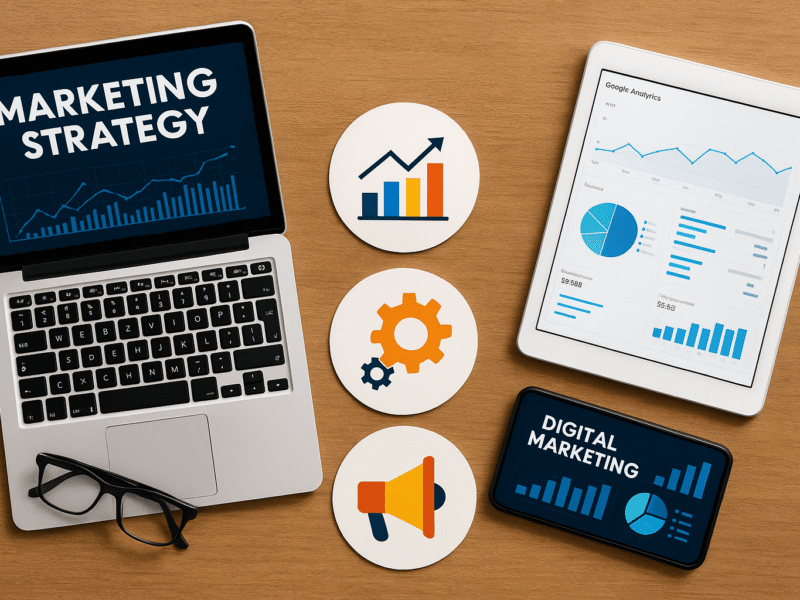
Your Ultimate Guide to Empowering Marketing Efficiency with the Right Apps and Platforms
If you’re a business owner looking to elevate your digital marketing game, this guide is tailor-made for you. In a landscape where technology, attention spans, and consumer expectations evolve daily, staying ahead demands more than just hustle and instinct—it requires strategic utilization of the right digital marketing tools.
The competition in digital spaces has intensified, and the pressure to generate measurable results—from lead generation to revenue attribution—has never been higher. At The Digital Collective (TDC), we’ve invested significant time in vetting and optimizing our digital toolbox, ensuring each platform aligns seamlessly with our goals and workflows.
Whether you’re just building your marketing stack or fine-tuning an existing one, this detailed breakdown reveals not just which tools we use, but why they matter and how they integrate into real-world business challenges.
Why the Right Stack Matters: Impact Over Hype
Before getting excited about the “latest and greatest” digital tools, it’s crucial to ground your tech decisions in strategy. The sheer number of platforms available often leads to tool fatigue or worse—tool paralysis, where you buy subscriptions without integrating them effectively.
Reality Check: According to Statista, the average company now uses over 75 marketing tools. Yet only a fraction get actively used—mostly due to limited onboarding, fragmented ecosystems, and overlapping functionalities.
The emphasis shouldn’t be on how many tools you use, but how deeply you embed the right ones into your operational DNA. The tools that win? Those that combine user-friendliness with robust functionality and measurable ROI.
🎯 “Automation doesn’t replace marketers, it enhances them. The goal is augmentation, not replacement.” – TDC Team Lead
With the right stack in place, you can:
Reduce human error and redundant work through automation
Access real-time insights to validate or pivot strategies
Unify teams around centralized data and communication hubs
Increase ROI via precise targeting and performance tracking
Freely scale operations without ballooning costs or headcount
Let’s dissect the digital marketing platforms that help us deliver exceptional results—faster, smarter, and with greater precision than ever before.
1. Marketing Automation Tools: Engine for Scalable Growth
In today’s marketing era, automation has shifted from a ‘nice-to-have’ to a ‘need-to-survive.’ Research from Salesforce shows that 67% of marketing leaders already use at least one form of marketing automation—because it works.
Whether you’re nurturing B2B leads over a long cycle or driving real-time eCommerce conversions, automation creates contextual customer journeys without burning out your team.
✳ HubSpot: All-in-One Inbound Excellence
HubSpot is more than a marketing automation platform—it’s an entire ecosystem. Designed with inbound marketing principles at its core, it seamlessly integrates CRM functionality with marketing, sales, and customer service features.
Key Entities & Attributes:
– Entity: HubSpot – Attributes: Free CRM, Workflow Automation, Lifecycle Stages, Email Builder, CMS Hub, Marketing Attribution
Benefits at TDC and for growth-oriented businesses:
Allows integration of sales and service insights directly into campaign planning
Automated lead scoring and nurturing workflows shorten decision cycles
Custom-dashboards make campaign analytics visually intuitive
Native features like SEO recommendations and blog optimization aid content marketing directly within the platform
👉 Case Insight: After implementing HubSpot’s deal pipeline automation, TDC reduced manual lead handoffs by 48%, accelerating speed to closure and boosting conversion rates by 32% quarter-over-quarter.
✳ ActiveCampaign: Niche Targeting & Predictive Automation
For businesses whose marketing hinges on user behavior—like SaaS, online courses, or DTC brands—ActiveCampaign gives you advanced tools without unnecessary complexity.
What sets ActiveCampaign apart is its powerful customer experience automation (CXA) engine. It goes beyond traditional drip campaigns to include conditional logic, site tracking, and predictive sending, ensuring your message lands at the most opportune moment.
Smart Features We Leverage:
CXA and conditional branching
Deep segmentation with tagging, lead scoring, and contact ratings
Accurate conversion tracking across email, landing pages, and forms
Machine-learning powered A/B testing for subject lines and content blocks
🤖 Did You Know? Businesses that use ActiveCampaign for triggered emails report an average of 70.5% higher open rates than standard campaigns (source: EmailToolTester).
2. Analytics Platforms: Fueling Data-Driven Decisions
Gut feelings may have built brands in the past. Today? Data is the compass. Marketing analytics tools allow you to dissect customer behavior, test hypotheses, and optimize campaigns—all in real time.
Companies using data-driven strategies report up to 5–6x ROI compared to laggards (McKinsey & Co.).
📊 Google Analytics & GA4: Marketing Intelligence at Scale
With the rollout of Google Analytics 4 (GA4), marketers now have access to unified data that spans websites, mobile apps, and connected software.
Key Additions in GA4:
– Event-based tracking over session-based tracking, allowing deeper behavioral insights – Machine learning to predict user churn or conversion probability – Cohort analysis to understand return usage and user loyalty – Enhanced measurement for video engagement, scroll depth, and outbound clicks
At TDC, GA4 informs nearly every strategic pivot we make. From identifying high-converting user paths to optimizing attribution modeling, it forms the keystone of our performance reporting.
📊 Hotjar: The “Why” Behind the “What”
While GA4 tells you what users are doing, Hotjar reveals why they’re doing it (or not doing it).
Visual Behavior Data Includes:
– Rage click tracking—flags where users are getting frustrated – Conversion funnel drop-off points – Net Promoter Score (NPS) surveys and user polls – Mobile-specific behavior recordings
This qualitative data fills the critical gaps left by traditional platforms, enabling us to empathize with users and iterate on design or CTAs with clear intent.
🔍 Fact: After incorporating insights from Hotjar scroll maps, TDC increased landing page sign-up rates by 21% by repositioning CTAs above the first scroll barrier.
3. Social Media Management Tools: Publish, Engage, Analyze
Considering that 4.9 billion people are active on social media (DataReportal, 2023), a strong, consistent social presence is no longer optional. It’s the front door to your brand.
But maintaining consistency, evaluating cross-channel ROI, and responding to DMs can quickly eat up hours—unless you wield the right tools.
📱 Buffer: Agility for Growing Brands
Buffer remains a go-to for marketing teams looking for speed and simplicity.
What we exploit most:
– Scheduled content queues for weeks in advance – RSS feed integration for content curation when internal content is low – Clear post-by-post analytics for understanding what drives clicks and saves – Collaboration features that allow team members to draft and preview posts before publishing
Buffer’s clean UX and stripped-down pricing make it ideal for solopreneurs, startups, and freelance marketers too.
📱 Sprout Social: Enterprise-Level Social ROI
For more nuanced campaigns, especially those involving sentiment tracking or omnichannel awareness, Sprout Social shines.
Entity-Based Features:
– Smart Inbox: Aggregates DMs, comments, mentions, and tags in one place – Listening Tools: Monitor keywords, hashtags, and competitor mentions – CRM Integration: Generates social customer profiles for better targeting – Social Benchmarking: Compare your performance to industry competitors
📈 After using Sprout’s conversation tagging system, one of our clients improved their community manager response rate by 63%, building stronger audience trust and brand affinity.
4. Collaboration Tools: Where Strategy Meets Execution
In marketing, brilliant ideas mean nothing without seamless execution. With remote teams and cross-functional workflows becoming the norm, collaboration tools transform siloed efforts into synchronized victories. At TDC, we treat these platforms as the central nervous system of our operations—connecting strategy, creativity, and analytics in real time.
✳ Slack: The Digital HQ for Agile Teams
Slack isn’t just a messaging app; it’s our virtual command center. By replacing endless email threads with organized channels, we’ve cut internal communication overhead by 35%.
Why It’s Non-Negotiable:
– **Integrations Galore**: Connect HubSpot, Google Analytics, or even Zoom calls in one workspace. – **Asynchronous Clarity**: Threaded discussions preserve context so new members onboard faster. – **Automation Edge**: Set alerts for campaign KPIs or social mentions via custom bots.
💡 TDC Tip: Create #wins channels to celebrate successes—it boosts morale and surfaces repeatable strategies.
✳ Notion: The All-in-One Playbook
Forget scattered Google Docs and Trello boards. Notion consolidates project briefs, content calendars, SOPs, and OKR tracking into a single living document.
How We Leverage It:
– **Dynamic Dashboards**: Build custom views for each team (e.g., social media calendars for creatives, ROI trackers for execs). – **Knowledge Repositories**: Turn tribal knowledge into searchable wikis—onboarding time dropped 50% post-implementation. – **Template Library**: Replicate winning campaign structures in clicks.
Bonus: The AI-Powered Toolkit You Can’t Afford to Ignore
While foundational tools handle today’s workload, these innovations future-proof your stack:
🤖 Jasper.ai: Your 24/7 Content Co-Pilot
Human creativity + AI efficiency = unstoppable output. Jasper drafts blog outlines, ad copy, and even personalizes email sequences at scale.
TDC’s Ethical Guardrails:
– Always edit AI output for brand voice. – Use it for ideation, not replacement. – *Result: 40% faster content production without sacrificing quality.*
🔮 Trend Prediction: Voice & Visual Search Tools
With 50% of Gen Z using visual search (Google, 2025), tools like **Pinterest Lens** and **Descript** (for AI-powered video editing) are rising stars. Prep now by: – Optimizing images with alt-text and schema markup. – Repurposing blog content into video scripts.
Final Thoughts: Building a Stack That Grows With You
The right tools don’t just solve problems—they reveal opportunities. As you refine your stack, remember:
Integration > Quantity: Five tools that talk to each other beat 20 siloed platforms. Use Zapier to bridge gaps.
ROI Is King: Audit tool usage quarterly. Does each platform pay for itself in time savings or revenue lift?
Human Insight Rules: Tools inform decisions; people make them. Never automate empathy.
🔭 The Next Frontier: Predictive Personalization
Tools like **Adobe Experience Cloud** and **Mutiny** use AI to deliver hyper-personalized web experiences in real time. Brands using predictive personalization see 3x higher conversion rates (Forrester, 2024).
“The best marketers aren’t tool collectors—they’re strategic architects. Your stack should feel like an extension of your team’s capabilities.” — TDC Strategy Lead
Your Action Plan:
– **Start Small**: Add one new tool per quarter. Master it before expanding. – **Measure Relentlessly**: Track efficiency gains (time saved) alongside revenue impact. – **Stay Curious**: Join beta programs for emerging tools.
Hungry for more? Bookmark this guide—we update it biannually with new tools and TDC case studies. Ready to transform your workflow? Book a free stack audit with our team to identify your hidden efficiency gaps.
🔔 Follow The Digital Cauldronon LinkedIn for real-time tool breakdowns and trend alerts!
Discover more from The Digital Cauldron
Subscribe to get the latest posts sent to your email.