
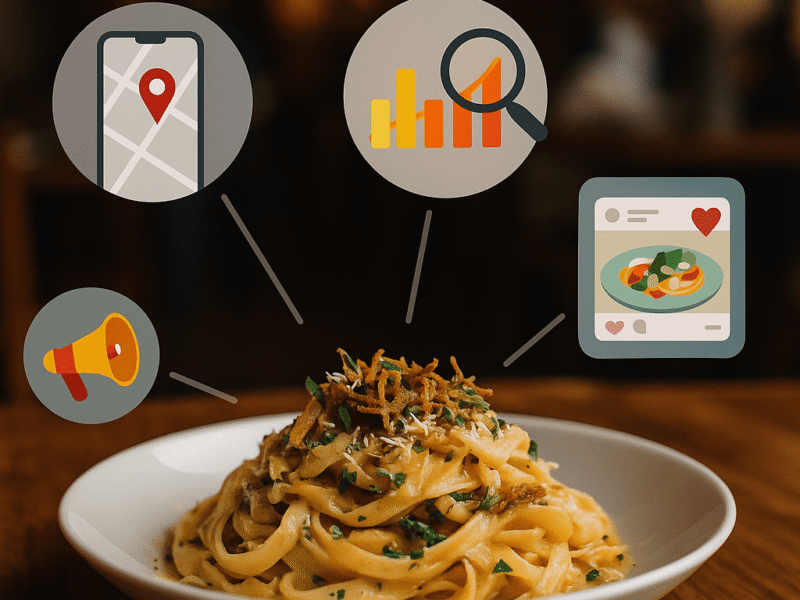
Boosting Your Restaurant’s Online Presence: A Digital Marketing Guide to Increase Visibility and Customer Engagement
In today’s digital-first environment, the way consumers discover and choose restaurants has fundamentally changed. No longer are word-of-mouth recommendations or enticing storefronts enough to compel foot traffic. In fact, research indicates that having a robust online presence is arguably as crucial as the quality of your food and the service you deliver.
Whether you’re running a fast-casual joint, a luxurious fine-dine experience, or a hybrid ghost kitchen model, visibility across digital platforms is your ticket to sustained relevance and profitability. According to Deloitte’s “Restaurant of the Future” report, digital channels drive customer decisions now more than ever, citing that 64% of consumers prefer ordering digitally at a location, while 50% want recommendations powered by AI and data personalization.
This comprehensive digital marketing guide equips you with powerful, practical strategies to elevate your restaurant’s digital visibility and customer engagement—from SEO-rich website structuring to leveraging the fast-paced world of influencer partnerships.
Why Your Restaurant Needs a Strong Online Presence
Let’s face it—restaurant discovery has moved online. Before diners even consider walking through your doors, they’re engaging with your brand across Google, Yelp, TripAdvisor, Instagram, and TikTok. That means your digital presence often gives the first impression—make it count.
📊 Consider this data-backed breakdown:
– 78% of local mobile searches result in an offline purchase, typically within a day. (Source: Google Think)
– 70% of millennial diners are inspired to visit a restaurant after seeing its food online. (Source: OpenTable)
– 90% of guests do online research before visiting a restaurant. (Source: Upserve)
– 53% of mobile users abandon a site that takes longer than 3 seconds to load. (Source: Google Mobile UX Report)
In a world saturated with choices, your visibility on Google Maps, local search engines, social platforms, and niche directories isn’t just valuable—it’s vital.
🔎 NLP/SEO Perspective: Entities such as “restaurant marketing,” “online visibility,” and “customer engagement” must appear consistently with high semantic relevance. Attributes like “search behavior,” “visual-rich content,” and “mobile responsiveness” should be contextually applied throughout.
1. Optimize Your Restaurant’s Website
Think of your website as the digital front door to your restaurant. It should reflect your brand ethos while being intuitive, fast, and tailored for local search experiences.
a. Clean, Mobile-Responsive Design
Consumers hate friction—and nothing is more frustrating than clunky navigation or slow loading. According to a HubSpot study, 93% of people have exited a site due to poor design. A strong restaurant website should meet these core UX standards:
– Mobile-first layout: Ensure accessibility and aesthetic presentation on all devices.
– Live reservation integrations: Platforms like OpenTable or Resy help convert website visitors into booked tables.
– Visual storytelling: High-res imagery should communicate ambiance, presentation aesthetics, and chef creativity. Invest in professional food photography—it pays dividends.
💡 Advanced Tip: Employ web analytics tools to measure user behavior and identify high-exit pages or usability drop-offs. Platforms like Hotjar or Crazy Egg offer heat mapping functionalities that are tailor-made for UX optimization.
b. Publish a Search-Optimized Menu
Google can’t crawl images or PDFs effectively, meaning any image-based or downloadable menu prevents SEO ranking. Instead, create searchable HTML menus using structured data.
How to SEO-optimize a menu:
– Use keyword-rich item names: e.g. “plant-based cashew queso tacos” or “wood-fired Neapolitan pizza.”
– Categorize sections clearly (e.g., gluten-free, dairy-free, vegan).
– Include pricing and ingredient details for transparency and search visibility.
🔍 Featured Snippet Targeting: Answer specific queries within menu descriptions like “Is your burger gluten-free?” through embedded FAQs to increase your chance of voice search inclusion.
c. Add Schema Markup
Schema enhances the information search engines display on your listing through rich snippets—think star ratings, special hours, reservation links, and more.
Using schema.org’s “Restaurant” markup, you can annotate details such as:
– Geographic coordinates
– Cuisine style (e.g., “Italian American fusion”)
– Delivery methods offered (in-house, Uber Eats, etc.)
– Accepted payment types
💡 NLP Angle: Consistently label your entity attributes—for instance, “Happy Hour availability: Yes” or “Curbside Pickup: Available”—to feed accurate entity-value pairs to search engines.
2. Build and Optimize Your Google Business Profile (GBP)
Your Google Business Profile is not a passive listing—it’s a dynamic, high-impact tool that amplifies search performance locally. Studies show that businesses with complete GBP profiles receive 7x more clicks than those that are incomplete.
Key Optimization Strategies:
– Business Category Precision: Start with “Restaurant” but optimize subcategories—e.g., “Vegan Restaurant,” “Wine Bar,” or “Korean BBQ.”
– Regular Post Updates: Use GBP’s post feature to share promotions, events, or blog links.
– Q&A Management: Pre-populate common questions (e.g., “Do you have outdoor seating?”) to manage customer expectations and SEO positioning.
📈 Case Study: A fusion bistro in Los Angeles noted a 47% traffic lift within three months after optimizing their GBP listing by uploading geo-tagged photos weekly and responding to 100% of reviews.
🔎 Semantic Relevance Play: Keep entity coherency between your GBP and website schema. If your GBP says “Thai & Sushi Cuisine,” ensure your site reflects the same noun phrases and descriptors.
3. Leverage Local SEO to Improve Discoverability
Local SEO is about being present in ‘micro-moments’—when a user wants to find food, fast. Google’s own data shows “near me” searches have skyrocketed 500% over the last three years.
a. Use Location-Based Keywords
Anchor your content with geographic intent keywords. Don’t just say “Delicious seafood.” Say:
– “Delicious seafood in downtown San Diego.”
– “Family-friendly fish and chips in Boston Harbor area.”
✅ Optimize title tags, meta descriptions, and H1 headers with geographic phrases for enhanced NLP match and indexing.
b. Create Local Landing Pages
For restaurant chains or multi-location brands, local landing pages assist in distributing authority and relevance. According to Moz’s Local Search Ranking Factors, “On-page signals” like city and state references contribute to over 14% of local SEO performance.
Each page should include:
– Google Maps embed
– Complete location-specific menu/hours
– Neighborhood keywords and internal linking to a regional blog or community event
c. Get Listed on Trusted Directories
Being listed consistently across high-authority platforms improves both trust and search engine confidence. Focus on:
– Yelp
– TripAdvisor
– Zomato
– Apple Maps
– DoorDash, Grubhub, Uber Eats (if relevant)
Tip: Use Moz Local or BrightLocal to audit NAP consistency and correct discrepancies at scale.
4) Master Social Media for Discovery & Desire
Choose the right channels (what to post, how to measure):
Instagram & TikTok: Short-form video sells cravings. Post chef POV, sizzling ASMR, “dish in 5 cuts,” plating reveals, and mini-stories (supplier visits, dough stretch, spice roast).
KPIs: views to 3-second retention, saves, shares, profile visits → reservation clicks.
Facebook: Local community + events. Cross-post Reels, run event reminders, push family bundles and holiday menus.
KPIs: event responses, message volume, clicks to call.
YouTube Shorts: Repurpose your best Reels with searchable titles (“How we glaze our miso salmon”).
KPIs: search impressions, suggested views, subs gained.
Bonus plays:
Snapchat near campuses (late-night specials).
LinkedIn for private dining, corporate catering, offsites.
Content pillars (ideas + mini prompts):
Taste: Macro close-ups, slow pours, steam shots, “knife-through” textures.
Hook line: “This is why our [dish] sells out by 8pm.”
People: Chef/owner story, line cook pride, pastry drops at 4pm.
Prompt: “What’s one thing guests don’t see that makes this dish special?”
Place: Ambience, patio at golden hour, live music clips.
Prompt: “30 seconds that feel like Saturday night at our bar.”
Proof: Review screenshots, award plaques, press quotes over B-roll (get permission).
Prompt: “What guests said about our brunch this week.”
Promo: Prix fixe, chef’s table, happy hour countdowns, seasonal menus.
Prompt: “Only this week: [offer]. Book from Story link.”
Cadence & mechanics (weekly rhythm):
Posting: 3–5 Reels/TikToks/week; Stories most days. Pin one post that routes to Reservations.
SEO in captions: “[Cuisine] restaurant in [Neighborhood], [City] • outdoor seating • family-friendly brunch.”
Alt text: “Close-up of caramelized crust on our ribeye with herb butter melting.”
Highlights: Menu, Specials, Reservations, Events, Catering, Reviews.
DM keywords: Set up auto-replies—send the exact link instantly.
“MENU” → menu URL
“BOOK” → reservations URL
“CATER” → catering inquiry form
Creative tips (so your videos actually get watched):
Hook in 2s: flame, sizzle, cheese pull, knife tap.
Shoot vertical, 0.8–1.2x zoom, natural light near windows.
Keep cuts tight: 0.5–1.0s edits, on-beat transitions.
Audio: Real kitchen sounds + light music under.
CTAs: “Tap Reserve,” “Save for date night,” “Tag your sushi friend.”
Tools: CapCut or VN for quick edits; Lightroom Mobile for consistent looks.
Workflow (so it’s sustainable):
Content station: phone tripod, clip-on light, clean tile backdrop, small turntable.
Shift capture list: 1 prep, 1 cook, 1 plating, 1 guest moment, 1 ambience.
Weekly sprint: Mon plan, Tue/Wed shoot, Thu edit, Fri–Sun publish.
What to measure (and fix):
If views stall: shorten hook, brighter lighting, closer framing.
If views good but no bookings: add Reservation stickers, link in bio, explicit CTA in first line.
If retention dips at 2–3s: cut the intro logo; start with the reveal.
5) Paid Ads That Actually Fill Tables
Funnel structure & budgets:
Prospecting (≈60%): Local radius + interests; goal—reach new diners.
Retargeting (≈30%): Site visitors, IG engagers, video viewers; goal—bookings/orders.
Loyalty (≈10%): Email/SMS lists and past purchasers; goal—return visits, VIP nights.
Meta (IG/FB) build—fast start recipe:
Campaign Objective: Sales (for online orders) or Leads (reservation intents) or Engagement (for creator UGC testing).
Ad sets:
Radius: 3–8 km urban, 8–15 km suburban.
Interests: foodies, brunch, wine lovers, families with kids (for early evening), live music (if relevant).
Placements: Reels + Stories prioritized; allow Advantage+ placements once creative is strong.
Creatives (UGC style): handheld, natural light, 9–15s, quick cuts.
Copy template:
“Tonight’s lineup: [3 mouthwatering items]. Book a seat 6–9pm. Patio’s heated. ⤵️”
Offer ideas: prix fixe, ‘two small plates + dessert’, “wednesday wine nights,” “happy hour till 6.”
Frequency guardrails: If frequency > 3.5/week and CTR drops, rotate creatives or widen radius.
Google Ads—capture intent you already earned:
Ad Groups: “best brunch [neighborhood]”, “[cuisine] near me”, “[restaurant name] reservations”.
Keywords: phrase + exact; add negatives (recipe, jobs, menu pdf, calories).
Extensions: sitelinks (Menu, Book, Directions, Private Dining), callouts (Outdoor seating, Vegan options).
Copy template:
“Book Dinner in [Area] • [Cuisine]. Chef’s seasonal menu. Patio & parking. Reserve a table now.”
Local/Performance Max: Sync GBP for directions/calls; use store-visit goals where eligible.
Call Ads: Only during service hours; count calls >30–60s as conversions.
TikTok Spark Ads (when a creator post pops):
Obtain post authorization code from the creator → launch Spark with Add to Cart/Reserve CTA → keep edits native, not polished. Short, loud, flavorful.
Delivery apps & Maps boosters:
Test sponsored listings on delivery platforms carefully—track margin.
Waze Ads on commuter corridors if you’re dinner-heavy with parking.
Measurement you’ll actually care about:
Primary KPIs: reservations, direction requests, calls, online orders, cost per booked table.
Attribution hygiene: UTMs on every link, unique promo codes by channel, call tracking numbers by campaign.
Incrementality check: geo holdouts for two weeks; watch uplift in bookings vs control.
6) Reviews & Reputation: Your Always-On Trust Engine
Acquire reviews without being pushy:
At-table prompts:
Check presenter slip: “Had a great time? Scan to leave a Google review—thank you!”
NFC tag at exit host stand.
Post-visit automation:
Dine-in: send 60–90 minutes after payment.
Delivery: next day at 11am.
Message: “Thanks for dining with us! If we earned 5⭐, would you share it on Google? It helps local guests find us. [Short link]”
Platform strategy: Google first for ranking, then Yelp/TripAdvisor/OpenTable depending on market. Never gate reviews or offer explicit incentives.
Reply framework with examples:
5-Star:
“Thank you, Ayesha! Chef Omar will love your note about the saffron risotto. We’re rolling a truffle special next week—hope to see you then.”
3-Star (mixed):
“Thanks for the honest feedback, Daniel. Thrilled you enjoyed the lamb, and we’re sorry the wait ran longer than expected. We’ve added a server on Friday nights to speed things up. If you’re open, email us at hello@…—we’d love a redo on us.”
1-Star (resolve offline):
“We’re really sorry, Priya. This isn’t our standard. I’m the GM—please email me at gm@… so I can make this right today.”
Operationalize it:
SLA: reply within 24 hours; same-day for 1–2 star.
Owner: assign one manager daily.
Weekly review: tag themes (wait, temperature, service), fix root causes, re-train, and close the loop.
Show it off (and help SEO):
Add a “What Guests Say” strip to your homepage and menu pages.
Mark up with Review schema so star ratings can appear in search.
Reuse standout quotes in paid ads and on in-store displays.
7) Email & SMS That Don’t Feel Spammy
Grow the list the right way:
Capture points: reservations, waitlist, Wi-Fi splash page, QR on menu, checkout for online orders.
Value exchange: early access to chef’s menu drops, birthday dessert, priority for holiday seating.
Core automations (exact structure):
Welcome Series (3 emails, 3 days):
The story + top dishes + “Reserve Now.”
Meet the chef + behind-the-scenes + Instagram highlight links.
Social proof (reviews/press) + soft perk (complimentary amuse bouche on weekdays).
Reservation flow: confirmation → day-of reminder with add-ons (wine pairing, kids’ menu, seating note) → post-visit thank-you + review ask.
Win-back: 60/90/180-day checks with a favorite-dish call-back (“Your spicy chicken is back on special Wed–Fri”).
Birthday/Anniversary: schedule 7 days prior; easy booking link + candle emoji in subject (it works).
Events & drops: 48-hour early access for subscribers.
Segmentation that moves revenue:
Daypart lovers (brunch vs dinner), cuisine preferences (veg/seafood/spice-tolerant), proximity, family vs date-night, high-spenders/VIP.
Cadence: 2–4 emails/month baseline; spike around holidays. One clear CTA each send.
Subject lines & copy (steal these):
“Your Friday table is calling.”
“Brunch with a view. Patio’s open at 11.”
“Two seats left for chef’s tasting—tonight.”
SMS (short, timely, compliant):
Use cases: day-of openings, weather specials, waitlist seats, last-minute event reminders.
Examples:
“Rainy-day ramen till 6pm. Show this text for complimentary tea. Book: bit.ly/ramen6”
“2 tables just opened for 8pm tonight. Reply BOOK for the link.”
Respect quiet hours; always include an instant opt-out.
Deliverability & hygiene (don’t skip):
Authenticate sending domain (SPF, DKIM, DMARC).
Warm new domains.
Suppress unengaged after 90 days; run re-engagement once before removal.
Metrics that matter:
Email: revenue per send, click to reservation rate, list growth vs churn.
SMS: click rate, replies, bookings within 24 hours of send.
8) Influencer Collaborations & the UGC Flywheel
Find creators who actually move seats:
Search Instagram/TikTok by neighborhood + cuisine + “foodie.”
Vet engagement rate (2–6% real comments), local audience %, content quality (natural light, appetizing color), posting consistency.
Outreach & offer (copy-paste):
“Love your local food reels—especially the [post link]. We’re hosting a seasonal tasting next week and would love to invite you for a chef intro + menu preview. In exchange, we’re looking for 1 Reel/TikTok, 1 carousel, 5–10 Stories, and 10 edited photos we can reuse (organic + paid). We’ll provide a unique booking link to track reservations you drive. Interested?”
Brief (make it easy):
Mood board, hero dishes, golden-hour window, do’s/don’ts (no heavy filters, no text overlays if we’ll Spark), disclosure (#ad).
Usage rights: organic/paid for 90 days, whitelist for ads.
Deliverables: exact counts, formats, due dates.
Track outcomes:
UTMs on profile link and Story links, creator-specific code (“BRUNCHJULIA”), reservations from that link, content saves/shares.
Re-book creators who drive bookings, not just views.
Always-on UGC program:
Signage: “Tag @handle for a chance to be featured.”
Monthly feature + free dessert for the best photo (clear rules).
DM for permission before reuse; credit in caption.
Store assets by dish and orientation in a shared drive; label for ads vs organic.
9) What’s Next: Future Trends to Watch
AI search/Overviews readiness:
Build FAQ blocks that answer conversational queries: allergens, halal/vegan options, parking, kid-friendly seating, noise level, gluten-free crust, delivery partners.
Keep schema current (Restaurant, Menu, OpeningHours, AggregateRating).
Ensure consistent entity data across site, GBP, menus, and socials.
First-party data & Loyalty 2.0:
Use QR menus to attach preferences (spice level, veg, wine likes) to profiles.
Reward with experiences (chef counter access, early menu tastings) more than discounts.
Send true personalization: “We saved you two bar seats at 7 if you want them.”
Conversational commerce (DMs & WhatsApp):
Auto-replies: MENU, BOOK, CATER, ALLERGENS.
Escalation to human for edge cases (large party, accessibility seating).
Keep response times under 5 minutes during service.
Short-form video dominance (make it operational):
Minimal kit: phone, tripod, clamp light, mini turntable, microfiber cloth.
Staff SOP: each shift captures 5 clips (prep, sizzle, plate, pour, ambience).
Weekly review and edit; publish on a schedule guests can anticipate.
AR & interactive menus (early but fun):
Test a single signature dish in 3D or a 360-view dessert for private dining pitches.
Use it as PR bait: “We launched the city’s first AR dessert reveal.”
Sustainability & transparency:
Be specific: “We compost citrus peels,” “Oyster shells go to reef restoration,” “Leftover bread → next-day croutons.”
Show partners and farms by name; post the story, not just the claim.
Privacy & tracking shifts:
Rely more on email/SMS + server-side tracking in your ordering platform.
Make consent crystal clear; let guests pick how you contact them.
Wrap-Up
This expanded Part 2 turns strategy into muscle memory: social that triggers cravings, ads that catch intent, reviews that compound trust, owned channels that print ROI, creator engines that scale word-of-mouth, and a future-proof posture for AI search and privacy changes.
Discover more from The Digital Cauldron
Subscribe to get the latest posts sent to your email.