
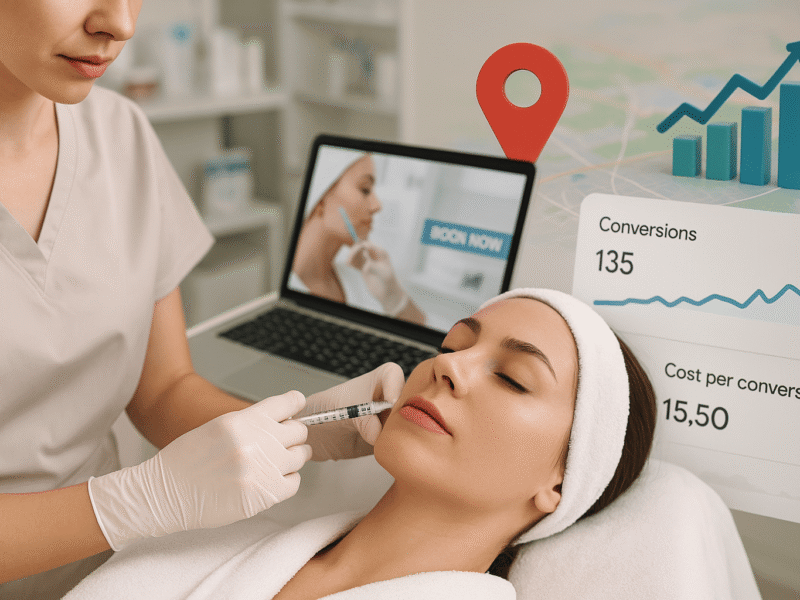
1. Nail Your Positioning, Offers, and Compliance (Before You Touch Ads)
Your brand isn’t “everything for everyone.” Pick 2–3 flagship services (e.g., injectables, laser hair removal, body contouring), define the ideal client for each (concerns, budget, objections), and package signature bundles with clear outcomes and sensible timelines. Make your POV explicit: medical-grade results, zero gimmicks, transparent aftercare.
Stay policy-clean from Day 1.
Meta requires 18+ targeting for cosmetic procedures and bans anything that drives negative self-perception. Side-by-side “before/after” comparisons are restricted for wrinkles treatments; any allowed depictions must be realistic and not body-shaming. Build your creative and ad targeting around these guardrails so you don’t get throttled mid-launch. Transparency
Mind your data.
If you’re a HIPAA-regulated entity (or share PHI with vendors), configure pixels and analytics to avoid impermissible disclosures. HHS’s 2024 bulletin re-emphasizes that tracking on authenticated pages (and some unauthenticated flows like appointment forms) can involve PHI; note that a Texas court vacated a portion of that guidance about IP+page visits on public pages—so get legal review and implement least-data principles either way. HHS.gov
2. Turn Your Website into a Booking Machine
Your site has one job: convert curiosity into appointments. Above-the-fold proof (credentials, reviews), real-time “Book Now”, cost/financing clarity, and anxiety-reducing FAQs & aftercare. Strip friction ruthlessly.
Performance matters.
Google recommends achieving good Core Web Vitals—LCP, INP, CLS—because page experience aligns with what its ranking systems seek to reward. Use the Core Web Vitals report in Search Console and fix anything labeled “Poor/Needs Improvement.” Google for Developers+1
Give Search more to work with.
Add LocalBusiness structured data (and Organization on the homepage). Where eligible, bookings can be enabled via Google’s Maps/Reserve integrations—more surfaces, fewer taps, higher fill rates. Validate markup with the Rich Results Test and keep it updated. Google for Developers
3. Own Your Backyard with Local SEO
Your Google Business Profile (GBP) is the new front door. Verify, complete every field, keep hours/promos current, post weekly, and respond to every review. Local rankings are driven by relevance, distance, and prominence—and complete, consistent info helps you show up when it matters. Google Help
Build durable signals:
Reviews flywheel: ask right after the visit (QR in-clinic + SMS/email link).
Service pages: one treatment per page, with photos, FAQs, downtime, and booking CTAs.
NAP consistency: match details across site, GBP, and directories to avoid trust leaks.
4. Content That De-Risks Decisions (and Survives Google’s Standards)
Health-adjacent content sits in the YMYL bucket; Google expects strong E-E-A-T (experience, expertise, authority, trust). Put licensed clinicians forward, cite sources, and stick to realistic outcomes and timelines. Google’s own guidance says the rater guidelines inform quality evaluation—even if they aren’t a direct ranking factor—which is your cue to write people-first content that actually helps patients choose safely. Google for Developers+1
Create a balanced mix:
Evergreen explainers (mechanism, candid risks, aftercare).
Versus posts (e.g., IPL vs. BBL) that help right-fit the treatment.
Short-form video (reels/shorts) answering pre-appointment FAQs—then embed on the service pages that need them most.
5. Paid Acquisition That Doesn’t Fight Your Funnel
Pair demand capture with demand creation:
Google Search / Performance Max: harvest “near me” intent and competitor queries; keep ad-to-landing message match airtight; push calls and forms into your CRM with instant follow-ups.
Meta & TikTok: education-led creatives (micro-lessons, clinician POVs, compliant testimonials). Respect 18+ targeting and avoid body-shaming or unrealistic transformations so delivery isn’t throttled. Transparency
Retargeting: warm audiences see proof-dense creatives (reviews, FAQs, limited-time bundles) and short forms. Don’t re-ask for data you already have.
Privacy by design: keep tracking off any page that collects sensitive medical details unless you have appropriate safeguards/agreements in place. HHS.gov
With positioning locked, the site tuned for speed and conversions, local signals compounding, trust-first content in place, and compliant ads feeding the funnel, you’re ready to quantify what’s working—exactly where your Section 6. Tracking Success picks up (GA4 goals, GBP Insights, ROAS, LTV) and then scale what wins in Section 7.
6. Tracking Success: Key Metrics Every Med Spa Should Monitor
You can’t grow what you don’t measure. Digital marketing isn’t just about launching campaigns—it’s about analyzing results and making data-driven decisions to increase ROI. Effective tracking ensures that your time and budget are focused on high-impact areas that actually drive appointments and revenue growth.
A. Core Website Metrics to Monitor
Use tools like Google Analytics and Google Search Console to track:
– Traffic Sources: Identify where your visitors are coming from—organic search, paid ads, social media, or direct visits. This helps evaluate channel performance.
– Bounce Rate: A high bounce rate may indicate poor landing page experience. Use heatmaps (e.g., Hotjar or Crazy Egg) to diagnose problem areas.
– Time on Site & Pages per Session: Longer sessions suggest more interest and better content relevance.
– Conversion Rate: How many visitors complete desired actions—like booking an appointment or submitting a contact form?
Pro Tip: Set up Goals in Google Analytics to track appointment bookings and newsletter signups accurately.
B. Local SEO Performance
To improve visibility in service areas, focus on local SEO metrics such as:
– Google Business Profile Insights: Track phone calls, direction requests, and website clicks from your profile.
– Local Pack Rankings: Tools like BrightLocal or Whitespark help track your local listing positions for key terms like “Botox near me” or “Scottsdale med spa.”
– Review Volume and Star Rating: A higher rating and frequency of reviews correlate with better local visibility and client trust.
Prompt your happiest clients to leave reviews right after appointments via follow-up email or SMS.
C. Social Media and Ad Performance Metrics
Monitor how your content performs on different platforms and how paid media contributes to bookings.
– Engagement Rate (Likes, Comments, Shares): Reflects how resonant your content is.
– Reach and Impressions: Help identify the scale and frequency of exposure.
– Ad ROAS (Return on Ad Spend): Use Facebook Ads Manager and Google Ads to track conversions and ROI.
– Lead Cost Per Channel: Compare how much each lead costs from Facebook, Instagram, Google Search, and even email capture pages.
Make use of UTM parameters and conversion tracking pixels to map end-to-end performance.
D. Email Marketing Metrics
Use your email CRM to monitor:
– Open Rates: Aim for 20–30% depending on your audience size.
– Click-Through Rate (CTR): Indicates how engaging and actionable your email content is.
– Unsubscribe Rate: A spike may suggest content saturation or misaligned content.
– Automation Campaign Performance: Evaluate how each email in your drip series is performing individually and collectively toward goals.
Use A/B testing to fine-tune subject lines, delivery times, and CTA placements for optimal performance.
7. Final Thoughts: Building a Scalable Digital Marketing Engine
The most successful med spas don’t just run random digital campaigns—they build a branded, repeatable marketing engine that compounds results over time. Whether you’re a single-location spa or part of a growing multi-location brand, scalability is the name of the game.
A. Build & Maintain a Marketing Tech Stack
Invest in reliable tools that save time and streamline marketing efforts:
– CRM: Tools like HubSpot or Pabau help manage leads and client relationships.
– Marketing Automation: Klaviyo, Mailchimp, or ActiveCampaign to automate emails and integrate with your booking platform.
– SEO Tools: Ahrefs, SEMrush, or Ubersuggest to continuously refine keyword strategy.
– Analytics Suites: Google Analytics 4 and Google Tag Manager for advanced tracking.
The right tech stack reduces manual work and gives you actionable data at every step.
B. Hire or Outsource Strategically
As your med spa grows, your marketing demands will too. Consider:
– In-House Marketing Manager: Great for coordination, branding consistency, and campaign oversight.
– Freelancers or Agencies: Ideal for specialized work—ad management, SEO, content writing, or social media.
– Virtual Assistants (VAs): Use VAs to help publish consistent, branded content across platforms without burnout.
Evaluate ROI constantly. Great marketing talent isn’t an expense—it’s a revenue-generating asset.
C. Experiment and Innovate
What works today might not work six months from now. Test new platforms and tactics:
– Try Google Performance Max campaigns for automated cross-channel ads.
– Explore short-form content formats like Instagram Reels and TikTok for FAQs and behind-the-scenes clips.
– Run 14-day flash sales or VIP package offers to see how urgency affects booking behavior.
Build a culture of marketing innovation in your team—try, measure, refine, repeat.
D. Focus on Lifetime Value (LTV), Not Just One-Off Bookings
Digital marketing should not only bring in new leads but also increase the value of each client over time.
– Use loyalty programs with exclusive perks (e.g., discounted packages, early access to new treatments).
– Send personalized treatment reminders based on client preferences and past bookings.
– Cross-sell retail products or advanced service bundles based on client profile data.
According to a Bain & Company study, increasing customer retention by just 5% increases profits by up to 95%. A sophisticated CRM will help segment and personalize client journeys, improving both retention and revenue.
A Glimpse Into the Future: What’s Next in Med Spa Digital Marketing?
As technology evolves, the digital marketing playbook for med spas is also transforming. Staying ahead of trends ensures that your marketing remains adaptive and competitive.
A. Hyper-Personalization Through AI and Predictive Analytics
AI-driven platforms can now predict client behavior based on past actions—creating ultra-personalized campaigns. For instance, if a client frequently books skincare treatments during seasonal changes, your system can automatically send them an offer for a hydrating facial when humidity dips.
Smart CRMs like Zoho or Salesforce are incorporating predictive tools that allow retargeting based on client lifecycle stages and sentiment analysis.
B. Voice Search and Zero-Click Results
With smart devices becoming standard, optimizing for voice queries is essential. Instead of searching “best med spa near me,” users now ask, “Alexa, find a nearby med spa with laser treatments.” Tailor on-site content for conversational keywords and FAQ-style queries.
Google’s zero-click results box (featured snippets) can also pull in your answers—driving exposure even without a direct click. Structure your content with bullet points, bold H2s, and concise answers to common treatment-related questions.
C. Virtual Consultations and Hybrid Client Acquisition
More med spas are offering virtual consultations over Zoom or proprietary platforms—especially for out-of-town clients or initial assessments.
Promote your teleconsultation options in ads and email funnels. Make them easy to book and emphasize convenience, privacy, and expertise. This can be a gateway to converting hesitant leads into committed clients.
Final Call-to-Action: The Roadmap to Full Appointment Calendars
Executing effective digital marketing isn’t optional—it’s survival.
This guide provided a multi-pronged blueprint for increasing visibility, converting leads, and keeping clients coming back. Whether you specialize in injectables, body contouring, or regenerative treatments, these strategies can be molded to fit your unique brand identity and market goals.
🎯 Here’s your checklist to get started this week:
– Audit your website and implement conversion best practices
– Research and refine your local SEO and keyword strategy
– Create a 30-day social media calendar focused on education + conversion
– Set up an automated email welcome series for new leads
– Identify 3 key metrics to track weekly and review performance on Mondays
Want to take your med spa growth to the next level?
👉 Book a free digital marketing strategy session with one of our experts today.
By structuring content that aligns with the needs of real med spa owners and marketing professionals, and leveraging proven SEO/NLP best practices—from phrase integrity and semantic roles to entity-specific value modeling—you put your brand in the top position to dominate online, attract high-quality leads, and increase overall lifetime client value.
Stay agile, stay visible, and above all—stay booked.
Discover more from The Digital Cauldron
Subscribe to get the latest posts sent to your email.